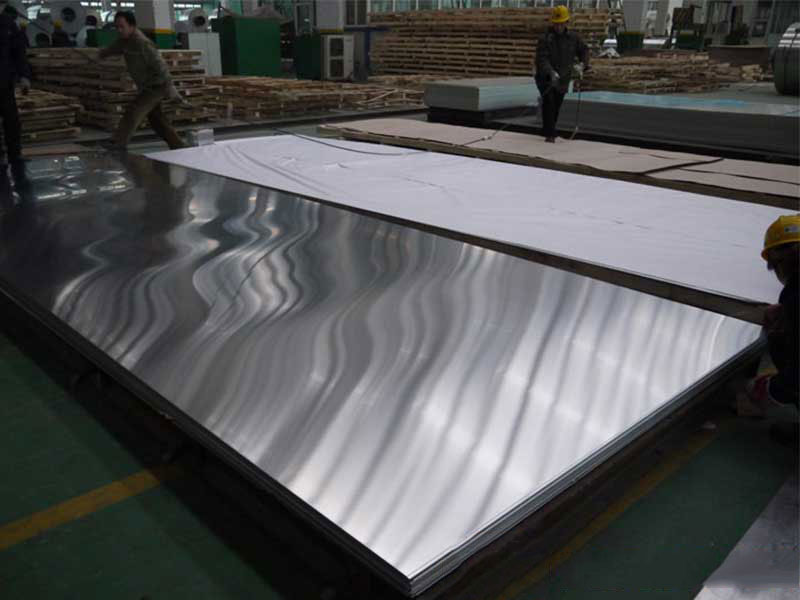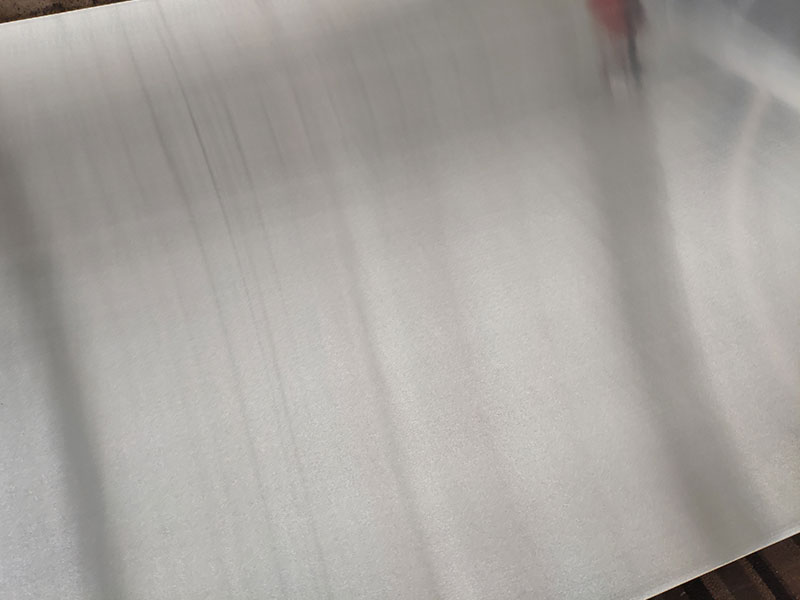

Aa5083 aluminum sheet
AA5083 aluminum sheet is a high-magnesium, non-heat-treatable aluminum alloy known for its excellent corrosion resistance, strong weldability, and high strength in demanding environments. It is one of the most widely used marine-grade aluminum sheets and is especially valued in shipbuilding, transportation, pressure vessels, and structural applications where durability and lightweight performance are essential.
This alloy belongs to the 5xxx series aluminum-magnesium family. Compared with many standard aluminum sheets, AA5083 offers a better balance of strength, seawater resistance, and fabrication performance. For customers looking for an aluminum sheet that performs reliably in harsh environments, AA5083 is often a preferred choice.
What Is AA5083 Aluminum Sheet?
AA5083 aluminum sheet is an aluminum-magnesium-manganese alloy with relatively high magnesium content. This composition gives the material strong mechanical properties and excellent resistance to corrosion, especially in marine and industrial atmospheres.
Unlike heat-treatable alloys, AA5083 gains its strength mainly through strain hardening and cold working. This makes temper selection very important when choosing the right sheet for manufacturing, welding, bending, or structural use.
Main Functions of AA5083 Aluminum Sheet
AA5083 aluminum sheet is designed to deliver several important functions in industrial and commercial use.
| Function | Description |
|---|---|
| Corrosion resistance | Performs exceptionally well in seawater, salt spray, and chemically aggressive environments |
| Structural strength | Provides high strength among non-heat-treatable aluminum alloys |
| Weight reduction | Offers lower density than steel, helping reduce total structure weight |
| Weldability | Can be welded efficiently with good retention of properties in many applications |
| Formability | Suitable for forming, bending, and shaping in selected tempers |
| Low-temperature performance | Maintains good mechanical performance in cryogenic environments |
These functions make AA5083 aluminum sheet suitable for both lightweight engineering and heavy-duty industrial projects.
Typical Applications
AA5083 aluminum sheet is used across many industries due to its strength and corrosion resistance.
| Industry | Typical Applications |
|---|---|
| Marine | Hulls, deck panels, superstructures, gangways, shipbuilding components |
| Transportation | Truck bodies, rail cars, tankers, trailers, vehicle panels |
| Pressure equipment | Pressure vessels, storage tanks, cryogenic tanks |
| Construction | Structural panels, cladding, architectural support parts |
| Energy and industry | Offshore structures, process equipment, industrial flooring |
| Defense and special engineering | Armor-related components, specialized fabricated structures |
In marine applications, AA5083 is particularly popular because it withstands prolonged exposure to seawater better than many other aluminum alloys. In transportation, its lightweight nature helps improve fuel efficiency and payload capacity.
Chemical Composition
The chemical composition of AA5083 is the basis of its performance. Magnesium is the major alloying element, while manganese and chromium contribute to strength and corrosion behavior.
| Element | Composition (%) |
|---|---|
| Silicon (Si) | 0.40 max |
| Iron (Fe) | 0.40 max |
| Copper (Cu) | 0.10 max |
| Manganese (Mn) | 0.40–1.00 |
| Magnesium (Mg) | 4.0–4.9 |
| Chromium (Cr) | 0.05–0.25 |
| Zinc (Zn) | 0.25 max |
| Titanium (Ti) | 0.15 max |
| Others, each | 0.05 max |
| Others, total | 0.15 max |
| Aluminum (Al) | Remainder |
This chemistry gives AA5083 its characteristic combination of high strength, excellent corrosion resistance, and good weldability.
Mechanical Properties
Mechanical properties vary depending on temper, thickness, and production standard. The values below are typical reference ranges for commonly supplied sheet and plate conditions.
| Temper | Tensile Strength (MPa) | Yield Strength (MPa) | Elongation (%) |
|---|---|---|---|
| O | 270–350 | 125 min | 12–20 |
| H111 | 275–350 | 125 min | 12–18 |
| H116 | 305–385 | 215 min | 10–14 |
| H321 | 305–385 | 215 min | 10–14 |
AA5083 is recognized for having higher strength than many other corrosion-resistant aluminum alloys. Tempers such as H116 and H321 are often selected for marine service because they are designed to improve performance in corrosive environments.
Physical Properties
The physical characteristics of AA5083 support its use in lightweight and demanding structural designs.
| Property | Typical Value |
|---|---|
| Density | 2.66 g/cm³ |
| Melting range | 570–640°C |
| Elastic modulus | 70 GPa |
| Electrical conductivity | about 29% IACS |
| Thermal conductivity | about 121 W/m·K |
| Thermal expansion coefficient | 23.4 × 10⁻⁶ /K |
Its relatively low density compared with steel provides significant weight savings, while its thermal and mechanical stability support a broad range of fabrication processes.
Common Temper Conditions
AA5083 aluminum sheet is available in several temper conditions, each suited to different forming and service requirements.
| Temper | Meaning | Typical Use |
|---|---|---|
| O | Annealed, soft condition | Maximum formability, deep shaping |
| H111 | Slightly strain hardened | General fabrication and moderate forming |
| H112 | Strain hardened from working process | Structural and general engineering uses |
| H116 | Special marine-grade temper with corrosion resistance control | Shipbuilding and offshore use |
| H321 | Stabilized strain-hardened temper | Marine structures and welded applications |
Choosing the correct temper depends on whether the priority is forming ability, strength, marine corrosion resistance, or weld performance.
Implementation Standards
AA5083 aluminum sheet is produced according to various international standards depending on the target market and application.
| Standard | Description |
|---|---|
| ASTM B209 | Standard specification for aluminum and aluminum-alloy sheet and plate |
| EN 485 | European standard for wrought aluminum sheet, strip, and plate |
| EN 573 | European standard for chemical composition and alloy designation |
| EN 515 | European standard for temper designation |
| AMS / aerospace-related references | Used for specialized industrial supply where applicable |
| Classification society specifications | Marine approvals from organizations such as DNV, ABS, LR, CCS for shipbuilding materials |
For marine or pressure vessel use, buyers often require extra certification, mill test reports, and third-party inspection to verify compliance.
Technical Specifications
AA5083 aluminum sheet can be supplied in a wide range of dimensions depending on project needs.
| Parameter | Typical Range |
|---|---|
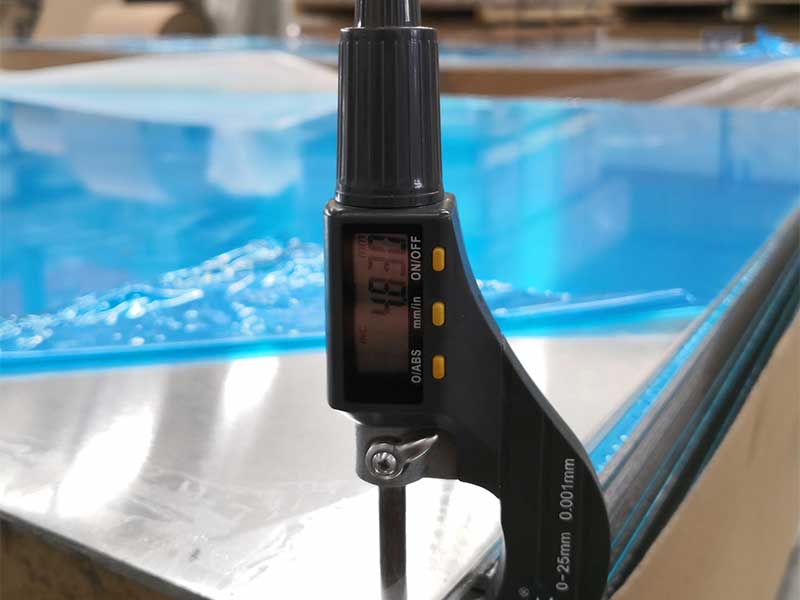
| Thickness | 0.5 mm to 200 mm |
| Width | 1000 mm to 2600 mm |
| Length | 2000 mm to 12000 mm |
| Surface finish | Mill finish, brushed, polished, embossed, coated |
| Supply form | Sheet, plate, cut-to-size panels |
Custom sizes are commonly available for industrial, marine, and fabrication projects.
Processing and Fabrication Characteristics
AA5083 aluminum sheet is well suited to many fabrication methods.
| Processing Method | Performance |
|---|---|
| Welding | Excellent, especially with suitable filler alloys |
| Bending | Good in softer tempers; tighter bends may require temper selection |
| Machining | Fair, generally less favorable than free-machining alloys |
| Forming | Good, especially in O and H111 tempers |
| Anodizing | Possible, though appearance may vary compared with decorative alloys |
Its weldability is a major advantage. In welded structures, AA5083 retains useful mechanical strength and shows strong resistance to corrosion in marine service.
Advantages of AA5083 Aluminum Sheet
| Advantage | Customer Benefit |
|---|---|
| High corrosion resistance | Longer service life in seawater and industrial environments |
| High strength-to-weight ratio | Reduced structural weight with strong load-bearing capability |
| Excellent weldability | Easier fabrication for tanks, ships, and structural assemblies |
| Good low-temperature toughness | Reliable use in cryogenic and cold-region applications |
| Marine-grade performance | Trusted material for shipbuilding and offshore structures |
These benefits explain why AA5083 is often chosen over standard commercial aluminum grades when higher performance is required.
Important Selection Considerations
When selecting AA5083 aluminum sheet, customers usually compare thickness, temper, dimensional tolerance, certification needs, and final application environment. For marine projects, tempers such as H116 or H321 are usually preferred. For forming-intensive work, O or H111 may be more suitable. For welded tanks or structural panels, mechanical property retention after fabrication should also be considered.
It is also important to confirm whether the application requires standard industrial material, marine classification approval, or pressure vessel compliance. These factors can influence both product specification and cost.