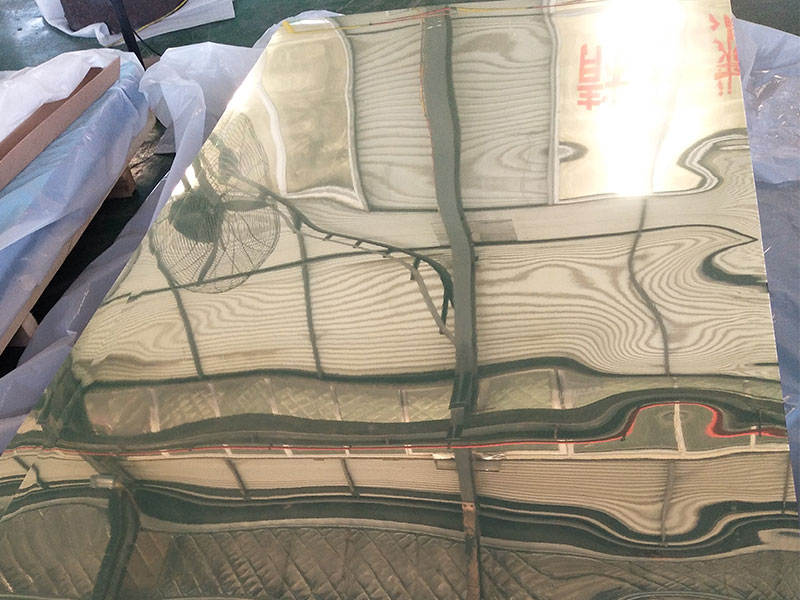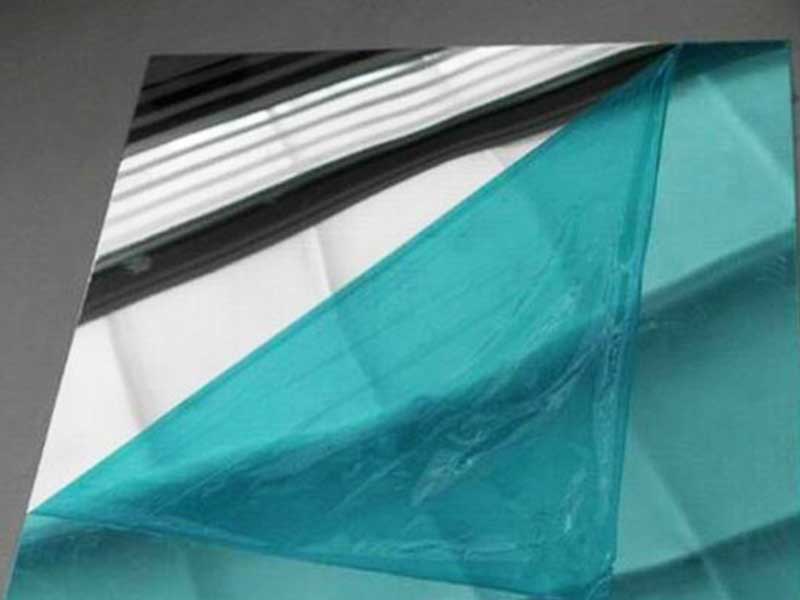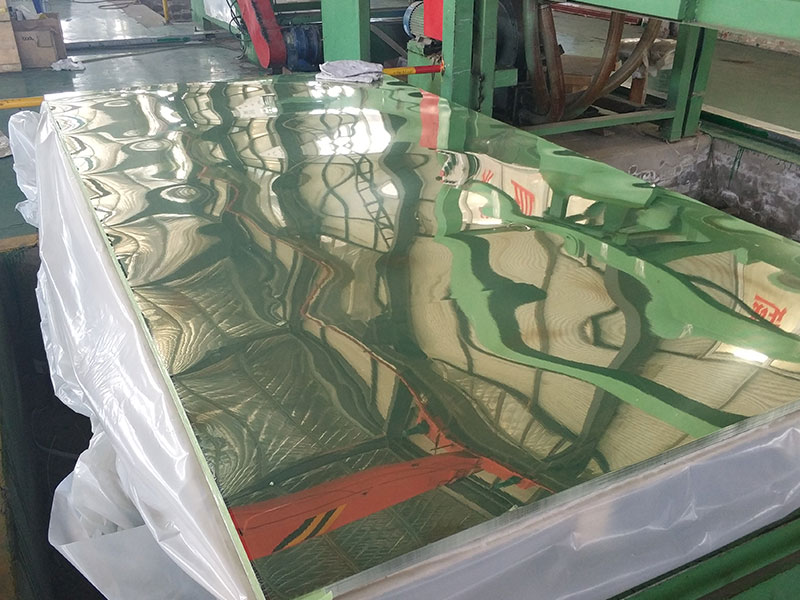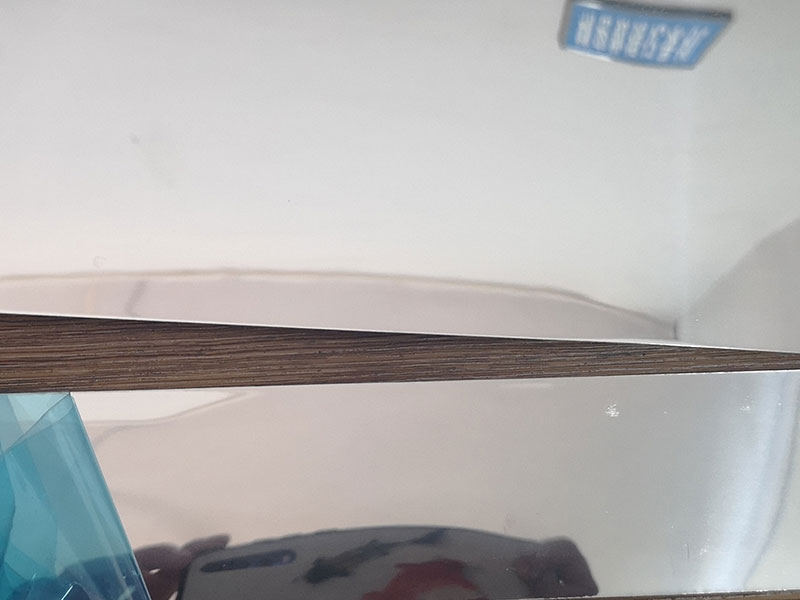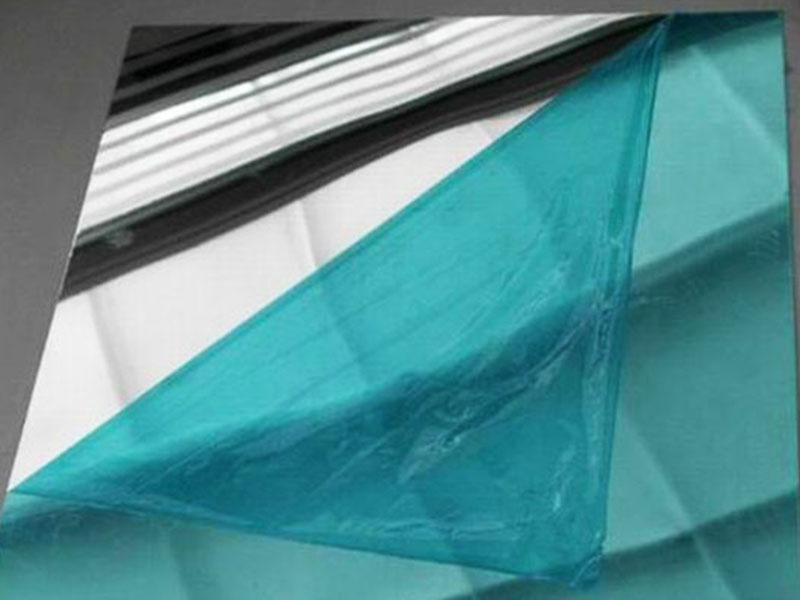

Mill finish mirror finish alloy coil 1050 1060 aluminum coil
Mill-finish and mirror-finish 1050/1060 aluminum coils are high-purity aluminum products designed for applications where formability, corrosion resistance, reflectivity, and surface consistency matter. Alloy 1050 and 1060 sit in the 1xxx series, meaning they are "commercially pure" aluminum (≥99.5% and ≥99.6% Al respectively). This purity drives excellent conductivity and a naturally protective oxide film, while the coil format supports efficient downstream processing such as stamping, roll forming, deep drawing, anodizing, and lamination.
In practice, customers choose between mill finish (cost-effective, production-ready surface) and mirror finish (high reflectance, decorative/optical surface). Both are available in coil to suit high-volume manufacturing.
Product name: Mill finish / Mirror finish alloy coil 1050 1060 aluminum coil
Core value: a versatile, high-purity aluminum coil that balances surface quality, workability, and corrosion resistance for industrial and decorative markets.
differentiators
- High aluminum purity: stable corrosion performance and superior conductivity.
- Excellent formability: ideal for tight radii, spinning, drawing, and embossing.
- Two surface options:
- Mill finish: uniform as-rolled look, best cost-performance.
- Mirror finish: bright, reflective, appearance-driven and functional for light management.
- Coil supply: optimized for continuous production lines and reduced scrap.
2) Alloy selection: 1050 vs 1060
While both are close in performance, 1060 generally offers slightly higher purity, often translating into incremental gains in conductivity and surface response (especially for high-reflectivity finishing). 1050 remains the workhorse for general forming and corrosion service at attractive cost.
| Item | AA 1050 | AA 1060 | What it means for users |
|---|---|---|---|
| Aluminum purity (typical minimum) | ≥99.50% | ≥99.60% | Higher purity helps conductivity and finish response |
| Strength level (as pure Al) | Low–Medium (temper dependent) | Low–Medium (temper dependent) | Both prioritize formability over strength |
| Typical best-fit | General forming, insulation jacketing, signage | Reflective surfaces, electrical/thermal applications | Choose by surface/functional requirement |
3) Surface finish options: mill vs mirror
Mill finish (as rolled)
Mill finish coil is produced by rolling and standard processing, delivering:
- Natural metallic appearance, slight roll marks possible
- Great baseline for painting, coating, insulation lamination, and general fabrication
- Best when you prioritize cost, throughput, and secondary processing
Mirror finish (bright reflective)
Mirror finish is produced via enhanced surface preparation (polishing/bright rolling, often combined with protective films). It delivers:
- High specular reflectance for decorative panels and reflectors
- Cleaner visual uniformity (when protected and handled correctly)
- Higher sensitivity to scratches-packaging and handling matter
| Parameter | Mill finish | Mirror finish |
|---|---|---|
| Visual appearance | Matte to semi-bright | High gloss, reflective |
| Scratch sensitivity | Moderate | Higher (requires film protection) |
| Common downstream | Coating, anodizing, stamping | Decorative lamination, reflectors, trims |
| Cost level | Lower | Higher (added surface processing) |
4) Chemical composition (typical limits)
Alloy chemistry may vary slightly by standard and supplier practice. The table below reflects commonly used limits for 1xxx series commercial purity aluminum.
| Element | 1050 (max, %) | 1060 (max, %) | Notes |
|---|---|---|---|
| Al | ≥99.50 | ≥99.60 | Balance is aluminum |
| Si | 0.25 | 0.25 | Impurity control supports finish quality |
| Fe | 0.40 | 0.35 | Fe affects formability and surface |
| Cu | 0.05 | 0.05 | Low Cu supports corrosion resistance |
| Mn | 0.05 | 0.03 | Typically very low |
| Mg | 0.05 | 0.03 | Typically very low |
| Zn | 0.05 | 0.05 | Typically very low |
| Ti | 0.03 | 0.03 | Grain refinement control |
5) Mechanical properties (typical by temper)
Because 1050/1060 are non-heat-treatable, strength is controlled primarily by cold work (H tempers) and softness by annealing (O temper). Values below are typical reference ranges; coil thickness, process route, and standard will shift results.
| Temper | Typical tensile strength (MPa) | Typical yield strength (MPa) | Typical elongation (%) | Best use |
|---|---|---|---|---|
| O (annealed) | 60–95 | 20–35 | 25–40 | Deep drawing, spinning, tight bends |
| H12 (1/4 hard) | 85–120 | 50–95 | 8–20 | Balanced forming + shape retention |
| H14 (1/2 hard) | 95–140 | 70–120 | 4–12 | Stiffness and flatness control |
| H16 (3/4 hard) | 110–160 | 90–135 | 2–8 | Higher rigidity, limited forming |
| H18 (full hard) | 130–185 | 110–160 | 1–5 | Maximum hardness; minimal forming |
6) Technical specifications (coil supply)
A strong coil product is defined as much by dimensional stability and surface control as by chemistry. Below is a practical spec framework frequently requested by customers.
| Item | Typical range / option |
|---|---|
| Alloy | 1050 / 1060 |
| Temper | O, H12, H14, H16, H18 (others on request) |
| Thickness | 0.2–6.0 mm (common), customized possible |
| Width | 20–2000 mm (slitting available) |
| Inner diameter (ID) | 150 / 300 / 505 mm (typical) |
| Outer diameter (OD) | Per weight/handling requirement |
| Coil weight | 1–10 tons typical (customizable) |
| Surface | Mill finish / Mirror finish |
| Surface protection | Paper interleaf / PE film (recommended for mirror) |
| Edge | Mill edge or slitted edge |
| Standards | ASTM / EN / JIS options (as agreed) |
7) Performance highlights (what customers feel on the line)
| Performance metric | Practical benefit in production |
|---|---|
| Corrosion resistance | Suitable for humid, coastal, and industrial atmospheres with proper design |
| Formability | Low cracking risk in bends/draws, high process window |
| Reflectivity (mirror) | Improves lighting efficiency, appearance, and visual impact |
| Conductivity | Advantage in electrical bus components, shielding, and thermal paths (design dependent) |
| Low density | Lightweight structures, reduced shipping and handling costs |
| Recyclability | High scrap value and strong sustainability profile |
8) Applications and use cases
A) Building & construction
- Insulation jacketing and cladding (mill finish 1050/1060): durable and easy to roll-form.
- Trim, ceiling panels, decorative strips (mirror finish): premium appearance with low maintenance.
B) Lighting & reflectors
- Reflector housings, lamp reflectors, light troughs (mirror finish 1060 often preferred): high reflectivity helps manage light distribution and improve fixture efficiency.
C) Signage and display
- Channel letters, nameplates, display panels: excellent for anodizing, printing, or lamination; mirror surfaces create high-end visual contrast.
D) Industrial forming
- Spun parts, drawn covers, HVAC components, duct accessories: O temper for deep drawing; H14 for better rigidity after forming.
E) General-purpose protective and decorative lamination
- Coated/laminated panels: mill finish provides a stable base for paint, PVDF/PE coating, or bonding films.
- High yield in forming: fewer rejects due to cracking and inconsistent elongation.
- Flexible finishing options: mill finish for cost, mirror finish for premium reflectance.
- Stable corrosion behavior: long service life with minimal upkeep.
- Efficient logistics: coil format supports automated feeding, slitting, and continuous production.
- Sustainability: aluminum is endlessly recyclable with strong end-of-life value.
10) Buying guidance: how to specify the right coil quickly
To ensure the coil matches your line and appearance requirements, specify these essentials:
| What to specify | Recommended detail |
|---|---|
| Finish | Mill finish or mirror finish (state reflectivity/appearance expectation if critical) |
| Alloy | 1050 (general) or 1060 (higher purity/reflective performance) |
| Temper | O for deep draw; H12/H14 for balance; H16/H18 for rigidity |
| Dimensions | Thickness × width, ID, max OD, target coil weight |
| Surface protection | PE film for mirror finish; interleaf for scratch control |
| Flatness/appearance | Define visible-side standard and allowable defects for decorative parts |
Closing note
"Mill finish mirror finish alloy coil 1050 1060 aluminum coil" is best understood as a high-purity, high-formability coil platform with two clear surface pathways: production-efficient mill finish and high-impact mirror finish. By pairing the right alloy/temper with appropriate protection and handling, customers get a coil that runs smoothly, looks consistent, and delivers reliable service across construction, lighting, signage, and general fabrication.
https://www.aluminumplate.net/a/mill-finish-mirror-finish-alloy-coil-1050-1060-aluminum-coil.html