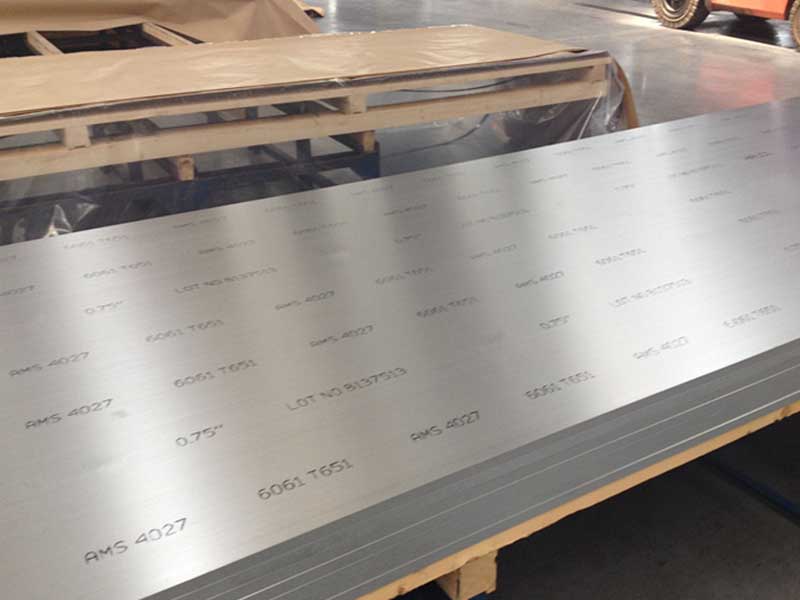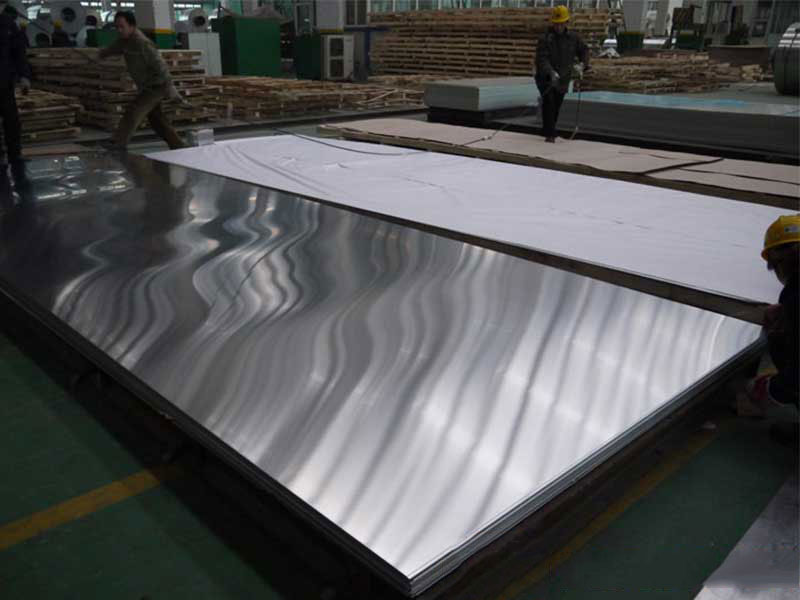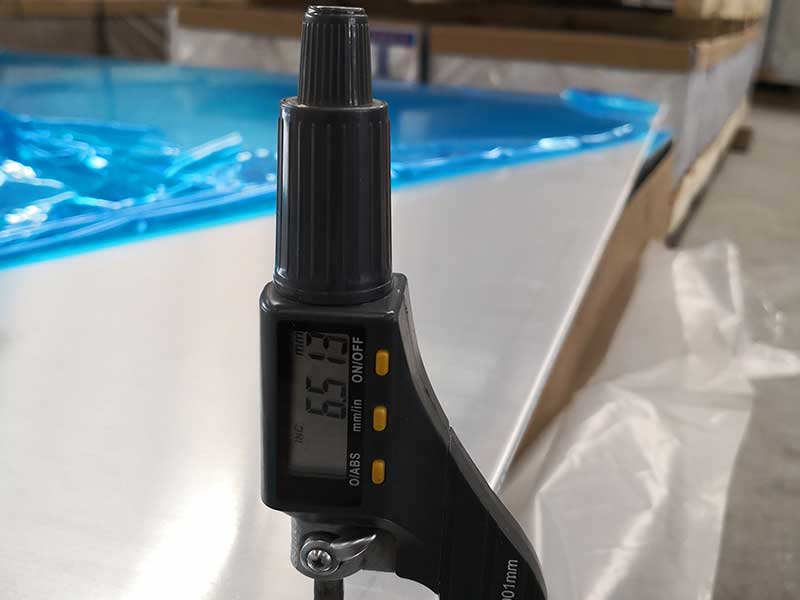

Aluminum Sheet Alloy 6063 T5
Aluminum Sheet Alloy 6063 T5: A Practical Engineer’s Choice
When people talk about aluminum for architectural profiles, window frames, and clean decorative panels, Alloy 6063 usually comes up first. But 6063 is not just an extruder’s alloy. In the right temper and thickness, 6063 T5 aluminum sheet becomes a smart option for customers who need a balance of strength, surface quality, formability, and corrosion resistance.
This overview looks at 6063 T5 sheet not from a textbook angle, but from the perspective of how buyers, designers, and production engineers actually use it in real projects.
What “6063 T5” Really Means
The designation carries three pieces of information:
6063 identifies the alloy. It is a heat-treatable Al-Mg-Si alloy, optimized for good extrusion and excellent surface finish. Compared with 6061, it has slightly lower strength but better extrudability and finer surface quality, which also benefits rolled sheet and plate products used decoratively.
T5 indicates the temper: cooled from an elevated temperature shaping process (like extrusion or hot rolling) and then artificially aged.
In practice, this means:- The metal is brought to its final shape at high temperature.
- It is then cooled, and
- A controlled artificial aging cycle is applied to reach a stable strength level.
T5 delivers a medium strength range, with a good compromise between hardness and workability. It is less hard than T6, but often easier to fabricate, bend, and finish.
Where 6063 T5 Aluminum Sheet Fits Best
From a practical standpoint, 6063 T5 sheet is chosen when:
- Surface appearance is a priority: components will be visible and may be anodized, painted, or powder-coated.
- Weight and corrosion resistance matter more than maximum strength.
- The part needs moderate forming, bending, or light machining, without cracking or excessive spring-back.
You will often see 6063 T5 used in:
- Architectural cladding panels and decorative façades
- Interior trim, ceiling panels, partitions, and furniture elements
- Window and door panel inserts, panelized curtain wall components
- Display cabinets, frames, exhibition structures
- Light structural covers, protective shields, and enclosure skins
Compared with 6061, 6063 is not the first choice for highly loaded structural plates, but it often wins where looks, smoothness, and corrosion resistance in atmospheric conditions are the priority.
Mechanical Properties of 6063 T5 Sheet
Exact values depend on thickness, supplier, and specific standard, but a typical range for 6063 T5 sheet is:
- Tensile strength (Rm): about 145–185 MPa
- Yield strength (Rp0.2): about 110–160 MPa
- Elongation: around 8–15% (depending on thickness and standard)
- Brinell hardness (HB): roughly 55–75 HB
For designers, the yield strength is usually the practical reference value for static load calculations, while the good elongation figure indicates decent ductility for forming.
The temper T5 stabilizes these properties reliably, giving consistent behavior during cutting, bending, and assembly.
Chemical Composition: What’s Inside 6063
6063 is an Al-Mg-Si alloy, with magnesium and silicon forming Mg2Si precipitates that provide strength after heat treatment. A controlled level of iron and other elements improves processing while maintaining surface finish.
A typical chemical composition range for 6063 is shown below (weight percent):
| Element | Content (%) |
|---|---|
| Si | 0.20 – 0.60 |
| Fe | ≤ 0.35 |
| Cu | ≤ 0.10 |
| Mn | ≤ 0.10 |
| Mg | 0.45 – 0.90 |
| Cr | ≤ 0.10 |
| Zn | ≤ 0.10 |
| Ti | ≤ 0.10 |
| Others (each) | ≤ 0.05 |
| Others (total) | ≤ 0.15 |
| Al | Balance |
This balanced chemistry explains much of the alloy’s behavior:
- Magnesium and silicon: main strengthening agents, responsive to heat treatment.
- Low copper: keeps corrosion resistance high, particularly in humid and marine atmospheres.
- Low iron and other impurities: support a fine, uniform surface that takes anodizing and coating well.
Implementation Standards and Typical Specifications
To ensure consistent quality and compatibility with international projects, 6063 T5 aluminum sheet is usually produced according to standards such as:
- ASTM B209 for aluminum and aluminum-alloy sheet and plate
- EN 485 series for wrought aluminum sheets and plates in Europe
- GB/T 3190 / GB/T 3880 in China for chemical composition and rolled products
When sourcing, customers usually specify:
- Alloy: Aluminum 6063
- Temper: T5
- Thickness range: often from about 0.5 mm up to 6–8 mm, depending on the mill
- Width and length: common widths include 1000 mm, 1200 mm, 1250 mm, 1500 mm; lengths can be standard (e.g. 2000, 2440, 3000 mm) or cut to size
- Tolerance class: standard or precision thickness and flatness tolerances as per the relevant standard
For projects with tight tolerances, flatness requirements, or special surface standards, it is good practice to state these explicitly in the purchase specification.
Surface Condition and Finishing Advantages
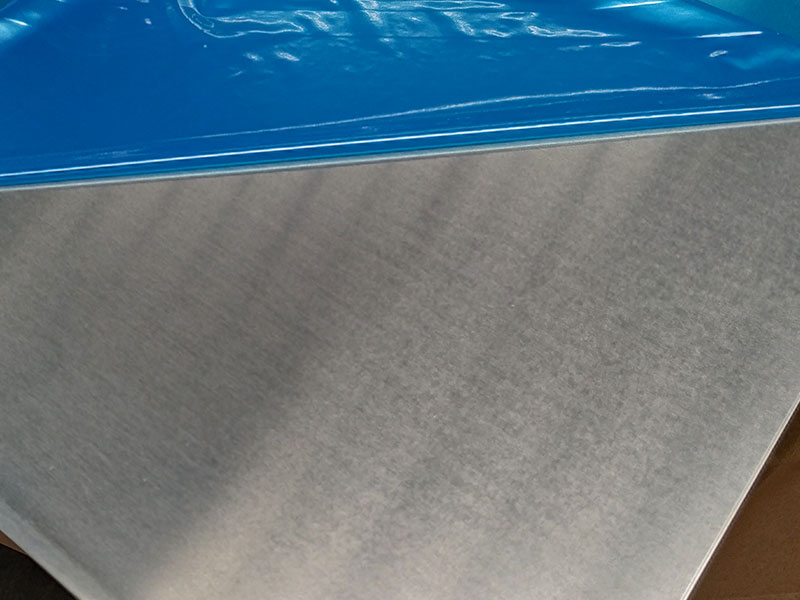
One of the main reasons to choose 6063 T5 sheet is its surface behavior. In real-world applications, this translates into:
Smooth, uniform rolled surface: fewer defects, ideal as a base for visible components.
Excellent anodizing characteristics:
- Clear anodizing for a natural metallic look
- Colored anodizing for architectural design
- Hard anodizing for improved wear resistance in certain applications
Good compatibility with powder coating and liquid paint systems: the alloy responds well to pre-treatment and gives even coating films.
For customers who want branded panels, decorative cladding, or equipment housings with uniform color and gloss, 6063 T5 is often more predictable than higher-strength structural alloys.
Forming, Machining, and Fabrication Behavior
Looking at the alloy from a workshop point of view:
Forming and bending:
- T5 offers moderate formability. It handles simple bends, roll forming, and light profiling reasonably well.
- Sharper bends or deep forming operations are possible with attention to bend radius, grain direction, and tooling conditions.
Cutting and machining:
- Can be cut by shearing, sawing, laser, or waterjet.
- Machinability is fair to good, sufficient for drilling and milling of fixing holes, slots, and edge profiles.
- Chips are generally manageable, especially with correct tool geometry and cutting speeds.
Welding:
- Weldable with common aluminum welding processes, especially TIG and MIG, using filler alloys such as 4043 or 5356 depending on the application.
- After welding, the local heat-affected zone can lose some strength; designs should allow for this if the joint is load-bearing.
For many architectural and enclosure parts, the combination of reasonable bending performance, reliable cutting, and clean surface is a major advantage.
Corrosion Resistance and Service Environment
Due to its low copper content and balanced Mg-Si ratio, 6063 T5 offers:
- Good atmospheric corrosion resistance, suitable for building façades, external cladding, and outdoor furniture in most environments.
- Strong performance under anodized finishes, where both decorative and protective oxide layers significantly extend service life.
In harsher marine environments, proper anodizing or high-quality coating systems are still recommended, but the base alloy itself is well suited for long-term outdoor use.
Typical Dimensions and Customization Options
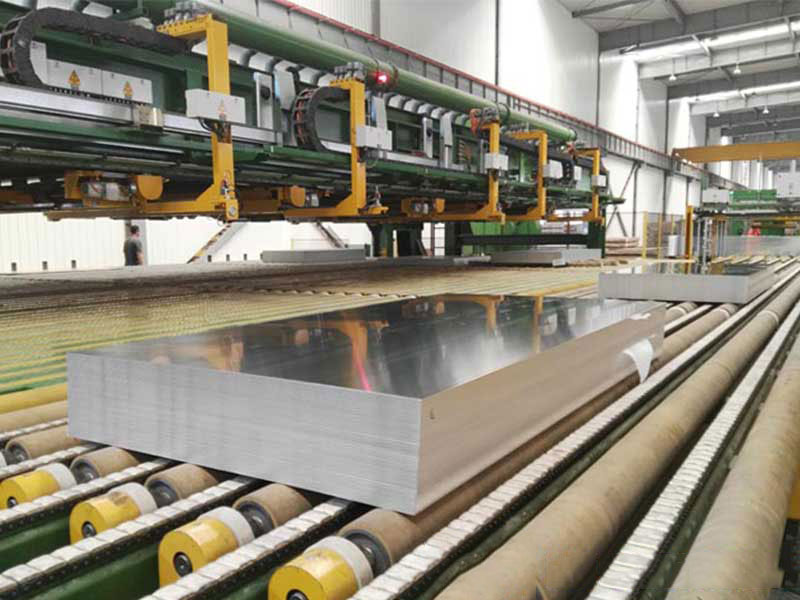
Suppliers often provide 6063 T5 sheet in:
- Thicknesses: thin gauge for interior panels and decorative pieces; medium gauge for light structural covers and architectural applications.
- Standard sheet sizes for stock availability and rapid delivery.
- Custom cutting, slitting, and even basic forming services on request, allowing customers to receive semi-finished parts ready for final assembly.
For OEMs and project contractors, this flexibility reduces internal processing time and simplifies logistics.
When to Choose 6063 T5 Over Other Alloys
From a selection standpoint, 6063 T5 is a smart choice if:
- The design emphasizes appearance and surface quality.
- Parts will be anodized or coated and remain visible to users.
- Loads are moderate, and maximum structural strength is not the primary requirement.
- Good corrosion resistance in outdoor or humid environments is needed.
If higher mechanical strength is critical, alloys such as 6061 T6 or 6082 T6 may be better suited. But for a large share of architectural, decorative, and enclosure applications, 6063 T5 offers a more balanced and economical solution.
Aluminum sheet alloy 6063 T5 brings together:
- A clean, finely controlled chemical composition
- Medium strength with reliable, stable properties
- Excellent surface quality and anodizing behavior
- Good corrosion resistance and adequate formability
These characteristics make it a practical, engineer-friendly choice for architects, fabricators, and manufacturers who need aluminum sheets that look good, perform reliably, and integrate smoothly into modern building and product designs.
https://www.aluminumplate.net/a/aluminum-sheet-alloy-6063-t5.html