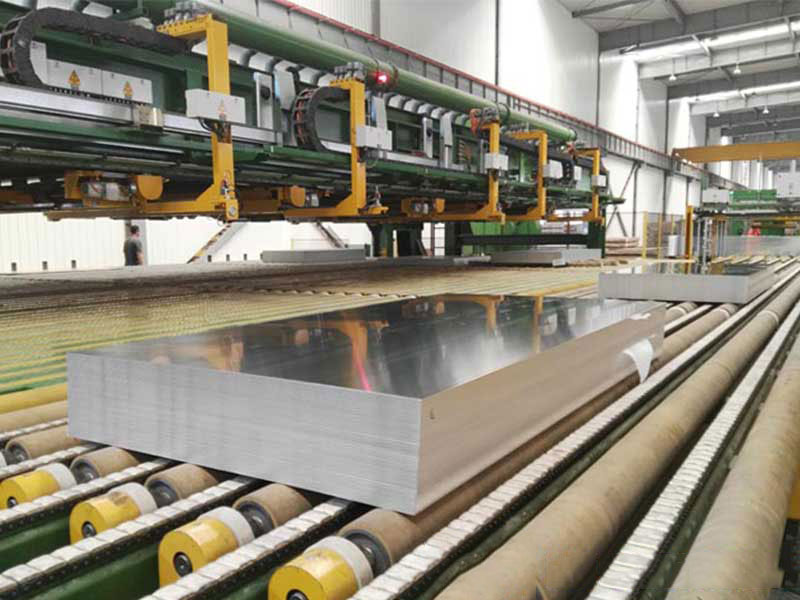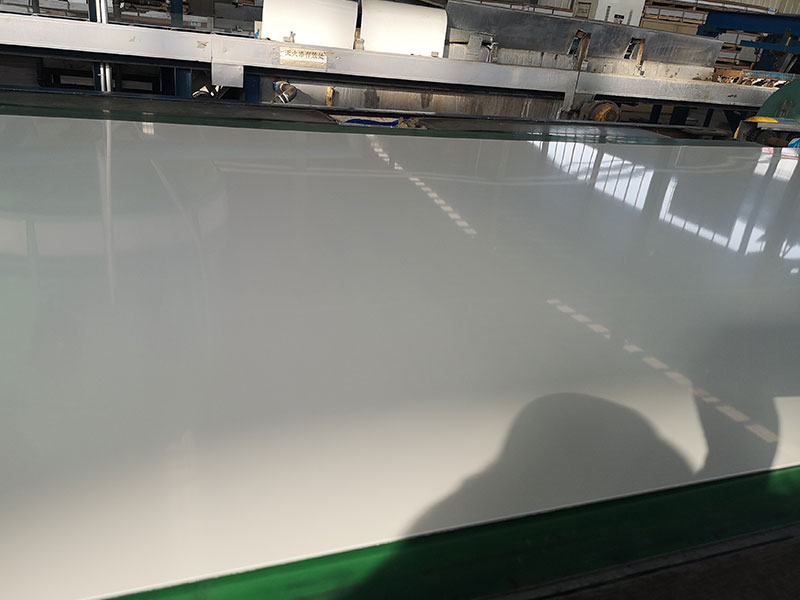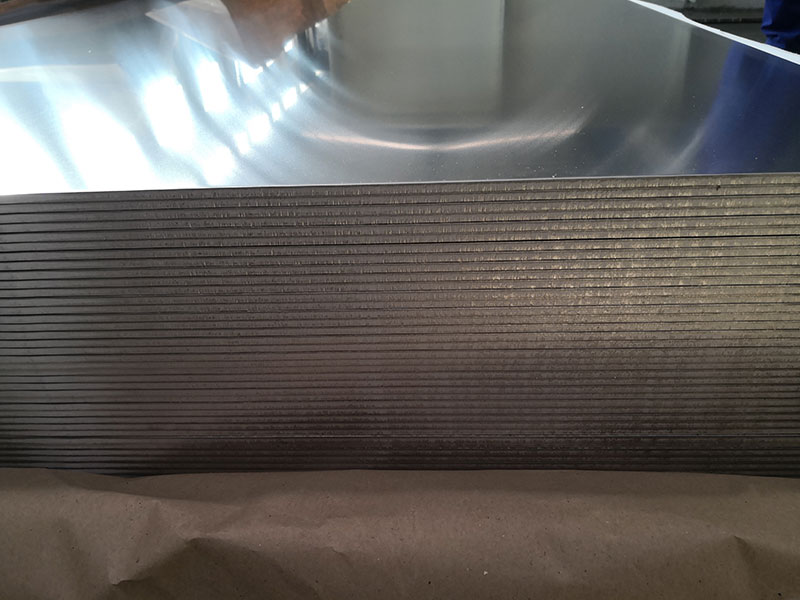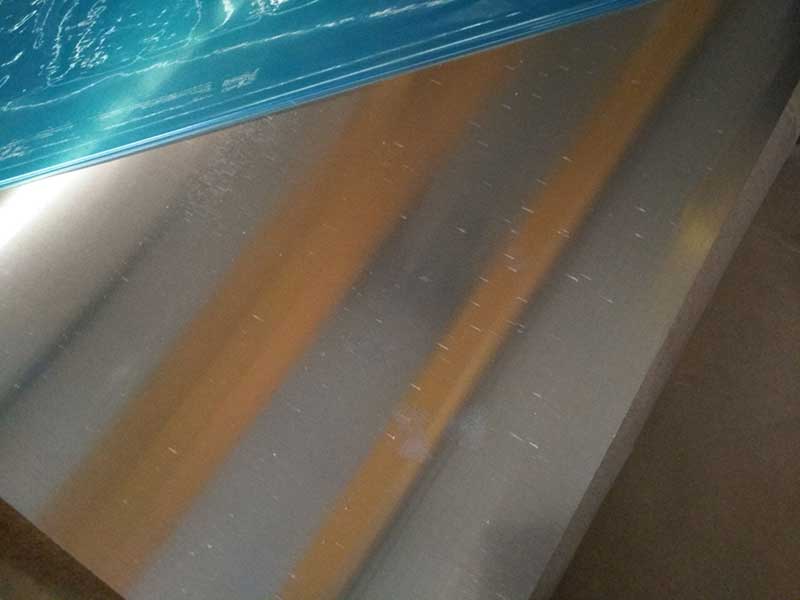

0.5mm thickness aluminum sheet aa1050 h24
0.5mm Thickness Aluminum Sheet AA1050 H24: When "Thin" Becomes a High-Performance Design Tool
A 0.5mm aluminum sheet can look deceptively simple. In practice, it sits in a sweet spot where material science meets everyday engineering: thin enough to form, bend, stamp, and laminate with ease, yet stable enough to behave consistently on production lines. 0.5mm thickness aluminum sheet AA1050 H24 is a prime example of a material chosen not for dramatic strength numbers, but for the quiet advantages that improve yield, surface quality, corrosion resistance, and processing speed.
AA1050 belongs to the 1xxx series of aluminum, known for high purity and excellent conductivity. The H24 temper adds a controlled level of work-hardening plus a partial anneal, giving the sheet a balanced "feel" in fabrication-less springback than harder tempers, with better rigidity than fully soft material. This combination is why many buyers keep returning to 1050-H24 when their priority is reliable forming and clean finishing at scale.
What AA1050 H24 Really Delivers at 0.5mm
The function of AA1050 at 0.5mm thickness is best described as process-friendly performance. It supports high-throughput manufacturing where defects, scratches, inconsistent bends, and coating failures cost far more than the metal itself.
Formability with control
At 0.5mm, even small shifts in temper can change the bending outcome. H24 is often selected because it forms smoothly without feeling "gummy," while remaining less prone to handling dents than fully annealed H14/H18 alternatives. It's particularly suitable for shallow draws, roll forming, hemming, and light stamping where the part geometry depends on stable material response.
Surface as a functional feature
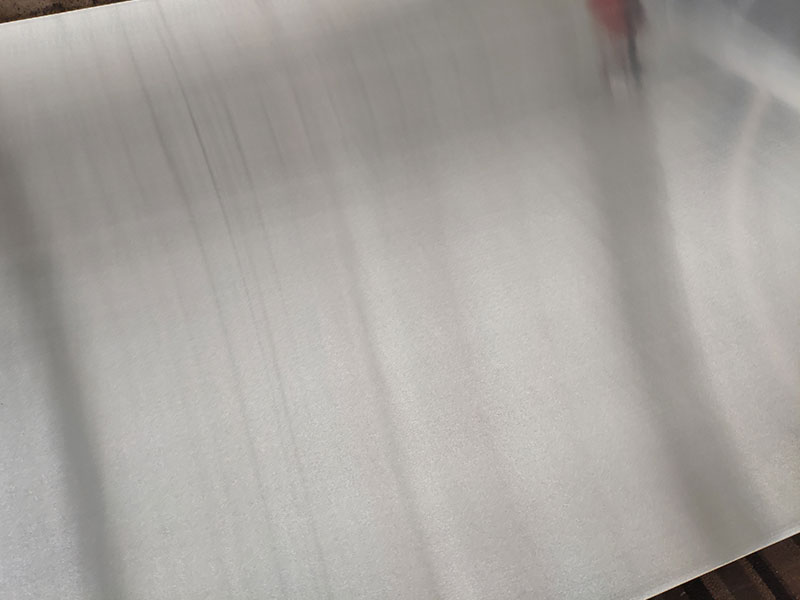
AA1050's purity helps it produce a clean, bright surface after rolling. That matters for applications where appearance is the product, but also for industrial uses where surface quality affects adhesion in painting, laminating, insulation bonding, or tape-backed assemblies. A good 1050 sheet is often easier to anodize and finish uniformly than more highly alloyed grades.
Corrosion resistance that supports thin gauges
At 0.5mm, you don't have much "metal reserve" to lose. AA1050 naturally forms a strong oxide layer, providing excellent resistance in many atmospheric environments. It's widely used in architectural trims, signage, and protective cladding where longevity depends on surface stability.
Thermal and electrical conductivity
One of AA1050's most distinctive advantages is that it performs like a "thin conductor sheet." In HVAC heat exchange fins, LED housings, heat spreaders, busbar laminations (light-duty), and shielding applications, conductivity is part of the job description-not an afterthought.
Applications Where 0.5mm AA1050 H24 Fits Naturally
Because it is thin, consistent, and finish-friendly, this sheet often appears in products customers interact with daily, even if they never notice it.
HVAC and heat transfer components
0.5mm is a common gauge for cladding, covers, and formed channels. AA1050 supports thermal movement and resists corrosion, while H24 improves handling stiffness during assembly.
Electrical and electronic uses
While copper dominates high-current conductors, AA1050 is valuable in lightweight conductive layers, shielding, grounding plates, transformer wrapping, capacitor foils (in other tempers), and laminated assemblies where weight, corrosion resistance, and cost are balanced against conductivity.
Insulation jacketing and protective coverings
Thin aluminum sheet is widely used as an outer skin for insulation in pipelines and equipment. The 1050 alloy provides good corrosion performance, and H24 helps the sheet hold its shape during forming and installation.
Signage, nameplates, and decorative panels
AA1050 is easy to print on, coat, emboss, and anodize. At 0.5mm, it's rigid enough for panel-like use when supported, yet light and economical for large-area coverage.
Packaging, closures, and light containers
Although many packaging products use different tempers, AA1050's cleanliness and corrosion resistance make it suitable for certain formed packaging parts, liners, and industrial covers where deep drawing is not extreme.
Parameters: What Buyers Typically Specify
For customers sourcing 0.5mm AA1050 H24 aluminum sheet, a "good deal" is usually defined by consistency rather than a single headline property. Common purchasing parameters include:
Typical thickness: 0.50 mm (often with tight tolerance depending on application)
Width: customized by coil or sheet supply, commonly slit to requirement
Length / form: sheets, or coils for stamping/roll forming lines
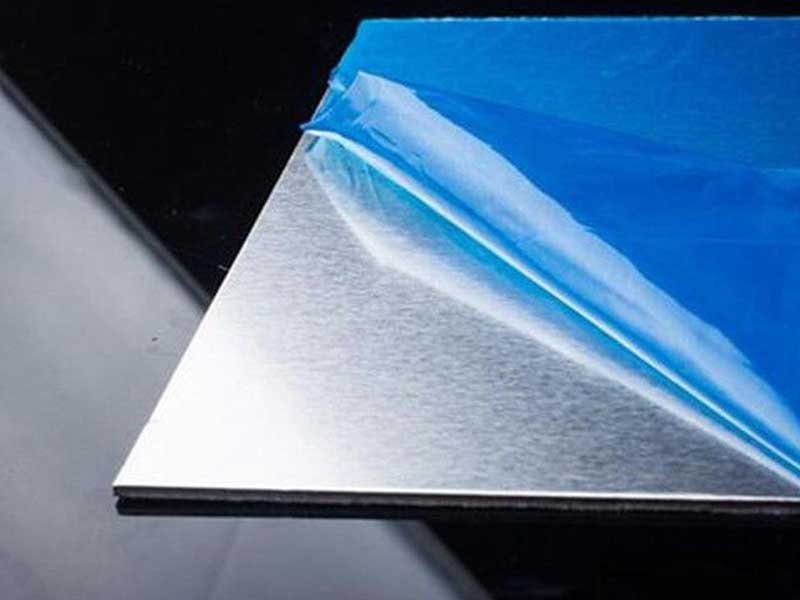
Surface: mill finish, bright finish, coated, or with protective film (on request)
Flatness: important for printing, laminating, and CNC cutting
Edge condition: mill edge or slit edge, depending on safety and assembly needs
Implementation Standards and Delivery Conditions
AA1050 sheet is generally produced and supplied under widely recognized aluminum standards. The specific standard used may depend on region and customer requirements.
Common reference standards include:
EN 485 series for aluminum sheets/strips in Europe (mechanical properties and tolerances)
ASTM B209 for aluminum and aluminum-alloy sheet/plate in many international trades
GB/T standards for China-based projects and procurement
To avoid mismatch, buyers often confirm: alloy designation system (AA/EN), temper definition, thickness tolerances, and surface requirements in the purchase order.
Temper H24: A Practical View of What It Means
Temper isn't just a code-it's a promise about how the sheet will behave in your workshop.
H24 indicates the sheet is strain-hardened (work-hardened) and then partially annealed. In real-world terms, this usually means:
It bends more predictably than harder tempers, with reduced cracking risk in tighter radii
It feels more stable than fully soft material during feeding, stacking, and handling
It supports better dimensional control in light forming and profile work
For many thin-gauge parts, H24 functions like a "balanced setting" that reduces scrap and improves throughput.
Typical Mechanical and Physical Properties (Reference)
Values can vary with producer, exact processing route, and applicable standard. The following are typical reference ranges:
Density: ~2.71 g/cm³
Thermal conductivity: high, typically around 220–235 W/m·K (approximate)
Electrical conductivity: typically around 60% IACS (approximate)
Tensile strength (H24): commonly around 80–110 MPa (typical range)
Yield strength (H24): commonly around 60–95 MPa (typical range)
Elongation: often around 5–20% depending on gauge and standard
When your application is sensitive to bending radius, stamping depth, or flatness after coating, it's best to confirm guaranteed mechanical property windows with the mill test certificate.
Chemical Composition Table (AA1050 Typical Limits)
AA1050 is a high-purity aluminum alloy. Exact limits may be stated slightly differently across standards, but the core expectation remains: aluminum content is extremely high, and impurity elements are tightly controlled.
| Element | Typical Limit / Range |
|---|---|
| Al (Aluminum) | ≥ 99.50% |
| Si (Silicon) | ≤ 0.25% |
| Fe (Iron) | ≤ 0.40% |
| Cu (Copper) | ≤ 0.05% |
| Mn (Manganese) | ≤ 0.05% |
| Mg (Magnesium) | ≤ 0.05% |
| Zn (Zinc) | ≤ 0.05% |
| Ti (Titanium) | ≤ 0.03% |
| Others (each) | ≤ 0.03% |
| Others (total) | ≤ 0.10% |
The Distinctive Value Proposition: Consistency at Speed
If you view 0.5mm AA1050 H24 aluminum sheet as "just a thin sheet," you risk missing its real advantage. Its strength is not about pushing structural limits; it's about repeatable manufacturing. In coating lines, stamping presses, forming jigs, insulation wrapping, and decorative finishing, AA1050 H24 behaves like a stable platform: it accepts processes easily, stays clean, resists corrosion, and keeps variability low.
For buyers, that translates into practical outcomes: fewer surface defects, smoother forming, faster line speeds, and more predictable finished-product appearance. In modern fabrication, that kind of quiet reliability is often the most valuable performance metric of all.
https://www.aluminumplate.net/a/05mm-thickness-aluminum-sheet-aa1050-h24.html