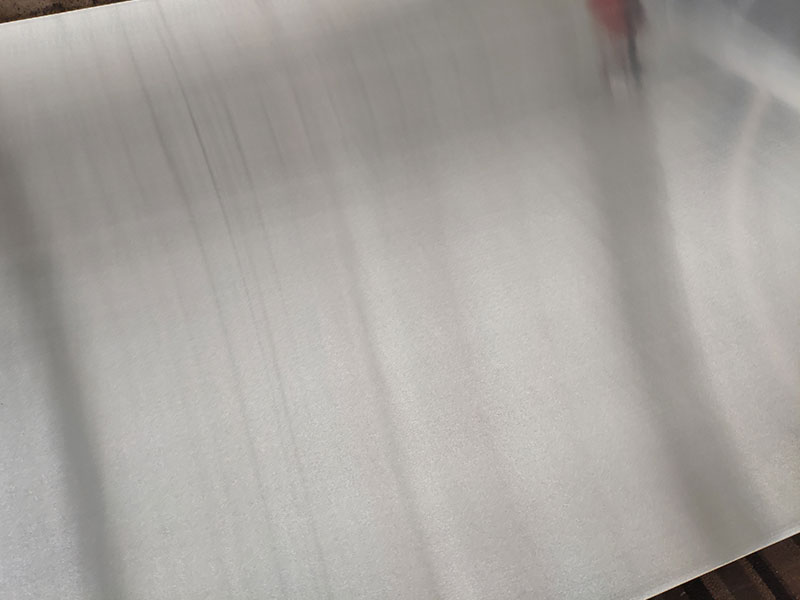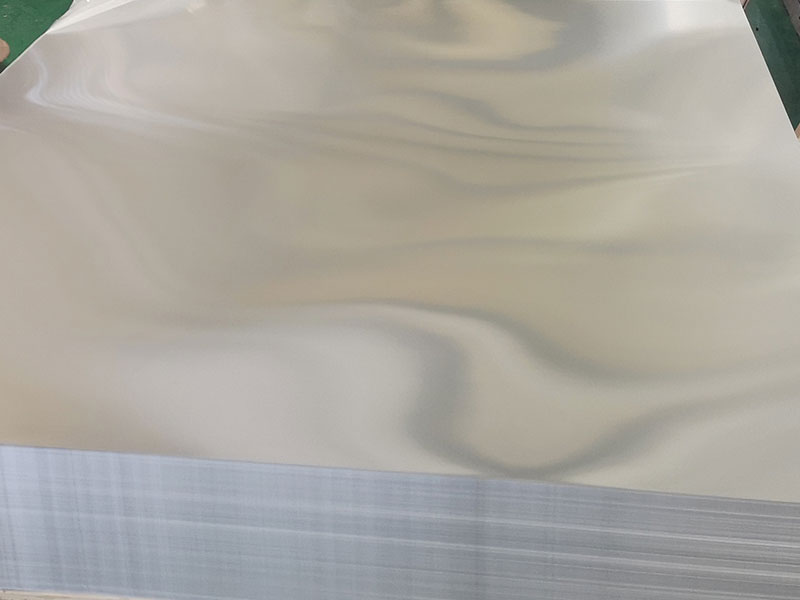

5083 H111 Aluminium sheets 10mm 20mm 30mm
If you spend your days around metal, you stop thinking of a plate as "just a plate." A 5083 H111 aluminium sheet in 10mm, 20mm, or 30mm thickness is less like a commodity and more like a decision with consequences: welding behavior, distortion control, corrosion margins, weight budgeting, and how forgiving the material will be when real fabrication inevitably deviates from the drawing. In that sense, these thicknesses feel like three different personalities of the same alloy-each tuned for a different kind of risk.
5083 is the marine-minded member of the 5xxx family. Its strength comes primarily from magnesium in solid solution, not from heat treatment. That single fact shapes everything: it welds well, it resists seawater ly, and it retains useful strength at low temperature. At the same time, it demands respect around service temperatures and long-term exposure conditions, because magnesium-rich alloys can sensitize if held in certain temperature ranges, which can reduce resistance to intergranular corrosion. Most well-run fabrication shops already "work with the grain" of 5083; they might not say it that way, but their procedures show they understand it.
What "H111" really buys you in thick sheet
H111 is often misunderstood because it sounds like a precise strength grade. It is actually a temper description that implies the material has received some amount of strain hardening and/or leveling, but less than H11/H12/H14. In practical terms, H111 is chosen when you want stable, general-purpose mechanical properties without pushing the alloy into the higher-strength, higher-residual-stress end of the spectrum. That matters more as thickness grows, because residual stress and flatness become harder to control, and welding introduces larger heat inputs and constraint.
For fabricators, H111 often feels "calm." It forms without acting springy, it welds with predictable softening in the heat-affected zone, and it's less likely to surprise you with distortion compared with more heavily cold-worked tempers. For end users, it's a sensible balance: strong enough for structural panels and tanks, ductile enough for fabrication, and aligned with the corrosion-resistance reputation that makes 5083 famous.
Thickness as a design language: 10mm vs 20mm vs 30mm
A 10mm 5083 H111 sheet is where many marine and transport structures start to feel efficient. At 10mm you can still treat cutting and edge preparation as relatively agile operations-CNC routing, waterjet, plasma, or laser depending on your equipment and cut quality needs. Weld procedures tend to be forgiving, and distortion management is achievable with standard fixturing. Designers often select 10mm when stiffness targets and impact resistance need to increase beyond thin plate, but weight still drives the conversation.
At 20mm, the material begins to act like a structural member rather than a skin. Heat input becomes a more central variable: pre-cleaning, joint design, and interpass temperature control begin to influence consistency. You also start to "feel" through-thickness effects such as slower cooling and larger weld pools, which can change bead profile and penetration behavior. 20mm is a common sweet spot for heavier-duty decks, bulkheads, equipment bases, and pressure-adjacent tanks where you want thickness-based robustness without jumping to a different manufacturing approach.
At 30mm, you're in the territory where fabrication planning is as important as the alloy itself. Weld sequencing, clamping strategy, and distortion allowances matter because every millimeter of shrinkage has more leverage. Cutting method selection is less about speed and more about edge condition and subsequent machining allowance. If the part is to be machined after welding, 30mm gives you room to true surfaces and remove distortion, but it also increases the payoff of stress-aware process planning. For heavily loaded structures, 30mm in 5083 H111 can be a pragmatic way to gain section modulus and dent resistance without moving to a different alloy system that might corrode faster in marine service.
Typical properties that customers actually care about
The attraction of 5083 H111 is not an extreme single metric; it's the combined behavior under real-world conditions. Expect strong corrosion resistance in seawater and many industrial atmospheres, very good weldability, and good low-temperature toughness. Mechanical properties vary with thickness, product form, and specific mill practices, so procurement should always reference the governing standard and the mill test certificate rather than relying on a single catalog number.
That said, many buyers use the following ranges as an initial screening benchmark for 5083 in H111/H112-type delivery:
| Property (Typical) | 5083 H111 (Plate/Sheet) |
|---|---|
| Density | 2.66 g/cm³ |
| Modulus of Elasticity | ~70 GPa |
| Ultimate Tensile Strength | ~275–350 MPa |
| Yield Strength (0.2%) | ~125–215 MPa |
| Elongation | ~10–20% |
| Thermal Conductivity | ~110–130 W/m·K |
| Electrical Conductivity | ~28–32% IACS |
| Melting Range | ~570–640 °C |
These values are useful as a "feel" for design and fabrication choices, but the acceptance criteria should be taken from the applicable standard for your region and application.
Chemical composition: what makes 5083 behave like 5083
5083's personality comes from magnesium, with manganese helping strength and microstructure stability. Chromium is controlled to support corrosion resistance and grain structure. Impurities are kept low to maintain performance.
Typical composition limits for AA 5083 are commonly referenced as:
| Element | Typical Limit (wt.%) |
|---|---|
| Mg | 4.0–4.9 |
| Mn | 0.4–1.0 |
| Cr | 0.05–0.25 |
| Si | ≤0.40 |
| Fe | ≤0.40 |
| Cu | ≤0.10 |
| Zn | ≤0.25 |
| Ti | ≤0.15 |
| Others (each) | ≤0.05 |
| Others (total) | ≤0.15 |
| Al | Balance |
Always confirm with the specific product standard and the mill certificate, especially if corrosion-critical marine service is involved.
Implementation standards and procurement notes
5083 sheet and plate are commonly supplied under regional standards such as ASTM B209 (sheet and plate) in many international projects, and EN 485/EN 573 series in Europe. The temper H111 is more common in EN language, while some ASTM supply chains lean on H321/H116 for marine plate with additional corrosion testing requirements. If you are buying for hull structures, offshore modules, or tanks where regulatory bodies are involved, it is worth aligning the purchase order with the exact standard and any supplementary requirements for corrosion testing, ultrasonic inspection, or through-thickness quality.
For 10mm, 20mm, and 30mm, thickness tolerance, flatness tolerance, and edge condition should be treated as functional specifications, not afterthoughts. If the sheet will be welded into long seams, flatness can save hours of fit-up. If it will be machined, clarify machining allowance and whether the plate is stress relieved by process route.
Tempering and fabrication realities: welding, forming, and corrosion
Because 5083 is non-heat-treatable, you don't "restore" strength after welding with a post-weld heat treatment. Instead, you design with the knowledge that weld zones soften relative to base metal, and you choose filler metals and joint geometry accordingly. Common fillers include 5183, 5356, and 5556 depending on strength and service environment expectations. Cleanliness is not optional: remove oxide and hydrocarbon contamination, and control interpass temperature to limit porosity and maintain consistency.
Forming 10mm is plausible with the right tooling; 20mm and 30mm shift more toward bending with larger radii and heavier equipment. In all cases, avoid prolonged exposure in temperature ranges associated with sensitization if long-term seawater service is expected, and consider specifying tempers and product categories designed for marine corrosion performance when required by the application.
A practical way to choose among 10mm, 20mm, and 30mm
If your project is weight-sensitive and the plate behaves like a skin, 10mm is often the practical starting point. If your project is stiffness-driven or subject to repeated impact, 20mm tends to deliver a noticeable step up in robustness without multiplying fabrication complexity too severely. If your project is load-intensive, abrasion-prone, or benefits from machining stock and dent resistance, 30mm can be a blunt but effective tool-provided you budget for the realities of heavier welding and more disciplined distortion control.
5083 H111 in these thicknesses is popular because it does not demand perfection from the world around it. It tolerates welders, weather, salt, and time better than many alternatives. And when you treat thickness as a design choice rather than a checkbox, 10mm, 20mm, and 30mm become three clear ways to speak the same language: durable aluminium built for real service, not just laboratory numbers.
https://www.aluminumplate.net/a/5083-h111-aluminium-sheets-10mm-20mm-30mm.html