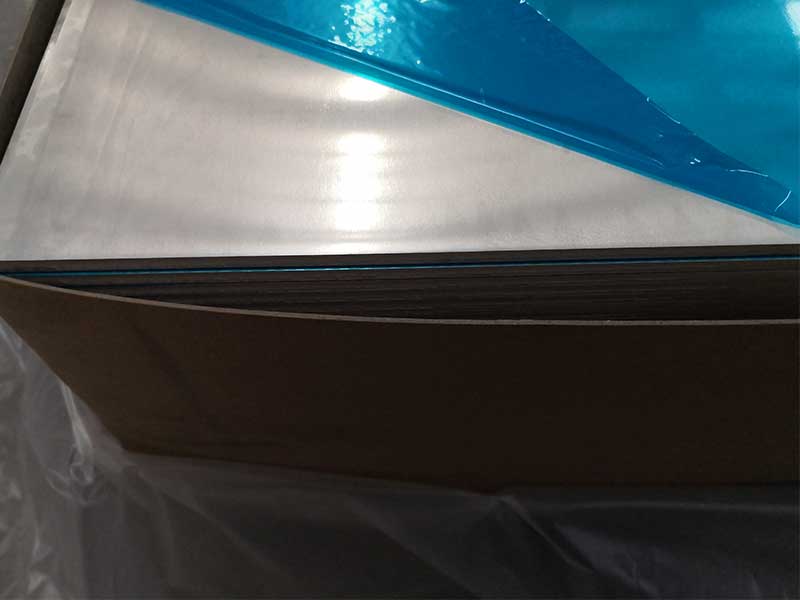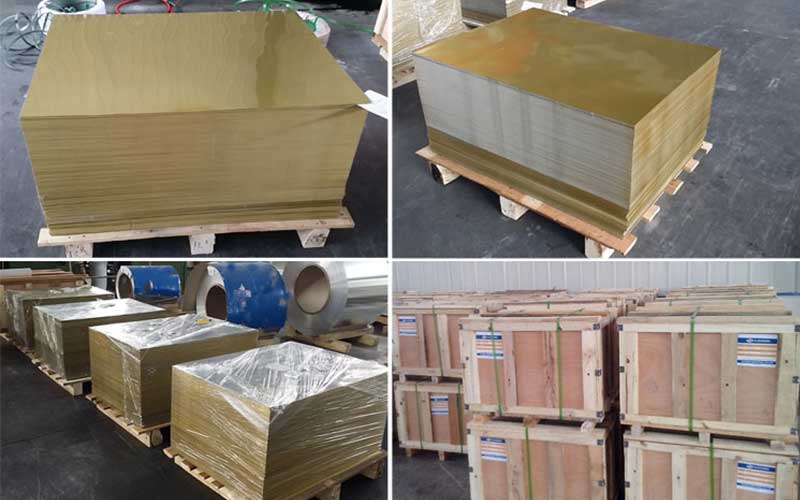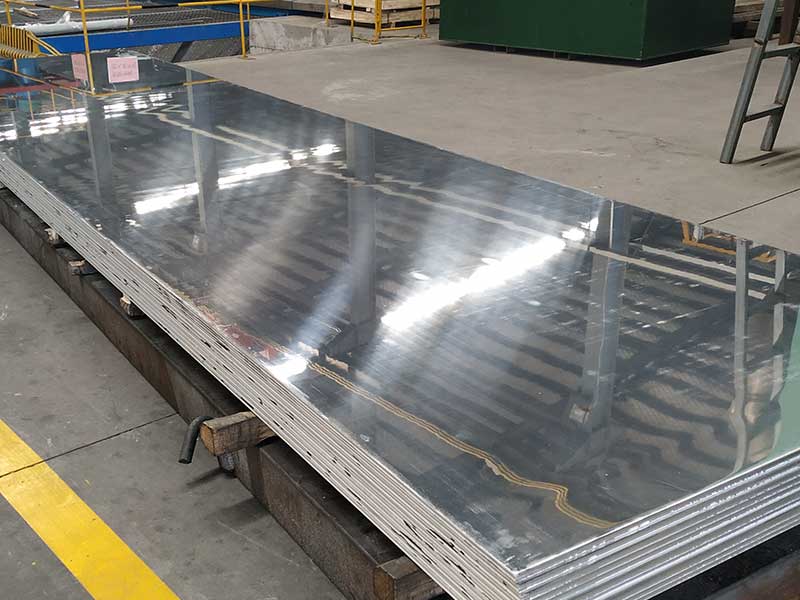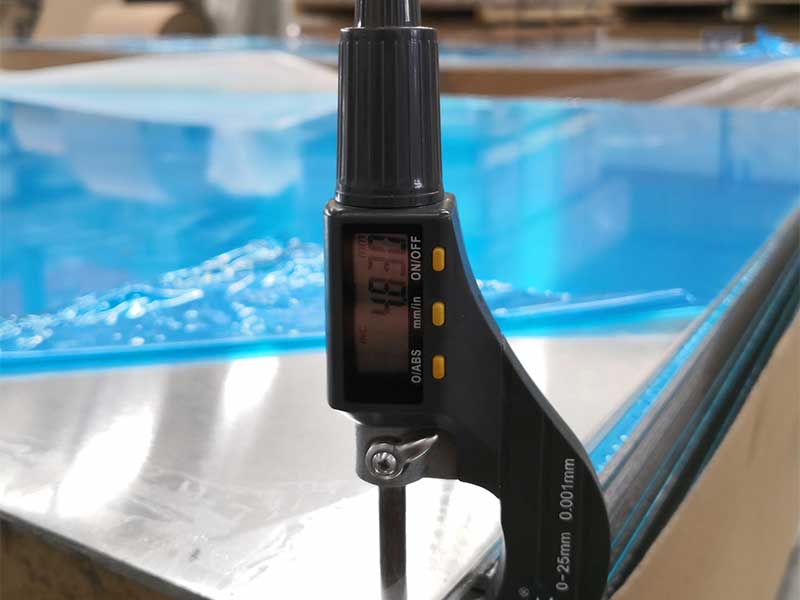

Aluminum sheet 0.5mm
Aluminum Sheet 0.5mm: Where Thickness Becomes a Design Tool
There is a moment in many projects where a designer, engineer, or fabricator stops thinking in terms of “metal” and starts thinking in terms of “thickness.” At 0.5 mm, aluminum sheet lives in that boundary zone: no longer a foil that flutters between your fingers, not yet the heavy plate that demands two hands and a crane hook. It is precisely in this in‑between world that 0.5 mm aluminum becomes uniquely powerful.
Instead of looking at it as “just thin sheet,” it is more useful to see 0.5 mm as a deliberate choice about how forces, heat, and aesthetics move through a structure.
The thickness that invites bending, not breaking
If you pick up a 0.5 mm aluminum sheet in a common alloy like 3003-H14 or 5052-H32, you’ll immediately notice two things: it flexes easily, and it springs back slightly. This combination is critical.
Thin enough to:
- Be sheared and punched with modest presses
- Be bent on relatively small radii without heavy tooling
- Conform to curved surfaces for cladding and skins
But still thick enough to:
- Hold a defined shape
- Provide real surface area for load transfer
- Resist tearing during careful forming
Designers use this thickness not as a compromise, but as a tool. A 0.5 mm sheet can be folded into stiff channels, shallow boxes, or corrugated profiles that dramatically increase rigidity without adding much weight. When you double or triple the number of bends, the apparent stiffness can far exceed what the sheet’s thickness alone would suggest.
Choosing the alloy: the personality behind the sheet
Not all 0.5 mm aluminum sheets behave the same. The alloy and temper turn a generic thickness into a specific material with a recognizable “personality.”
Common choices include:
1100-O / 1100-H14
Essentially pure aluminum with excellent corrosion resistance and formability, but relatively low strength. Often used when deep drawing, embossing, or complex shaping is required and loads are modest.3003-H14
A workhorse manganese alloy with better strength than 1100 and still very good formability. Widely used in HVAC fins, interior panels, and light covers.5052-H32 / H34
A magnesium alloy known for superior corrosion resistance, especially in marine or outdoor environments, and significantly higher strength than 3003. At 0.5 mm, it can withstand more demanding service while still forming reasonably well.6061-T6 (occasionally at 0.5 mm)
High-strength structural alloy; in T6 condition it is comparatively hard and less cooperative during tight bending. Used when flat, lightly formed parts must carry higher loads.
Each temper—O (annealed), H14, H32, T6—represents a specific balance of hardness, strength, and ductility. At 0.5 mm thickness, this balance is magnified. A temper that might feel forgiving at 2 mm can suddenly feel brittle at half a millimeter if you try to bend too sharply without checking the minimum bend radius.
Viewing 0.5 mm as a heat and conductivity strategy
Aluminum’s thermal conductivity turns 0.5 mm sheet into a fine tool for managing heat. When thickness drops to half a millimeter, two thermal behaviors stand out.
Heat spreading becomes very efficient across the plane of the sheet. A small hot spot disperses quickly, making 0.5 mm aluminum valuable as a heat spreader in LED backplates, electronic housings, and compact lighting fixtures.
At the same time, thermal mass is minimal. The sheet warms and cools quickly, a behavior exploited in appliance liners, heating panels, and components that need rapid temperature cycling.
Paired with its electrical conductivity, 0.5 mm aluminum also serves as an electromagnetic shield. Enclosures built from thin aluminum shells can attenuate EMI while remaining lightweight and easy to form. Folded hems, folded seams, and spot-bonded lap joints maintain continuity without significantly increasing thickness.
Tolerances and flatness: thin sheet, tight expectations
At 0.5 mm thickness, material variations that seem small on paper become quite noticeable in practice. A thickness tolerance of ±0.03 mm might sound tiny, but in bending and forming it can alter springback, affect press brake settings, and change how rollers engage the sheet.
Flatness is another subtle dimension. Thin aluminum wants to wave, buckle, or oil-can under its own internal stresses. Quality producers work within recognized standards such as EN 485 and ASTM B209 to control flatness and residual stress. For customers, the practical takeaway is simple: sourcing from mills that adhere strictly to these standards reduces rework and alignment issues in downstream operations like laser cutting, precision punching, and automated bending.
Implementation standards and quality framework
Behind every visually simple 0.5 mm sheet lies a network of standards that ensure consistency and safety:
- ASTM B209 / EN 485 govern chemical composition, mechanical properties, and dimensional tolerances for wrought aluminum sheet and plate.
- ASTM B928 may be referenced for marine or aggressive environmental applications, particularly when using 5xxx series alloys.
- ISO 6361 provides additional international guidance for wrought aluminum sheets and strips.
- Surface quality criteria, such as permissible defect size and density, are often tied to these primary standards, especially for anodizing and decorative applications.
For customers, referencing these standards on purchase orders is more than formality; it is a way to lock in predictable behavior during cutting, forming, anodizing, and welding.
A closer look: chemical composition of common 0.5 mm alloys
Typical compositions (mass percent, approximate) for widely used thin-sheet alloys:
| Alloy | Si | Fe | Cu | Mn | Mg | Cr | Zn | Ti | Al (balance) |
|---|---|---|---|---|---|---|---|---|---|
| 1100 | ≤0.95* | ≤0.95* | 0.05–0.20 | ≤0.05 | – | – | ≤0.10 | ≤0.05 | ≥99.0 |
| 3003 | ≤0.60 | ≤0.70 | 0.05–0.20 | 1.0–1.5 | – | – | ≤0.10 | – | Remainder |
| 5052 | ≤0.25 | ≤0.40 | ≤0.10 | ≤0.10 | 2.2–2.8 | 0.15–0.35 | ≤0.10 | ≤0.03 | Remainder |
| 6061 | 0.40–0.80 | 0.70 max | 0.15–0.40 | 0.15 max | 0.80–1.2 | 0.04–0.35 | 0.25 max | 0.15 max | Remainder |
*For 1100, Si + Fe combined is typically limited to about 0.95%.
These small percentages govern corrosion resistance, strength, and formability. For instance, the magnesium in 5052 is what gives it its superior marine performance, while the manganese in 3003 stabilizes the structure and improves strength without drastically compromising formability.
Bending, joining, and finishing: where craft meets material
At 0.5 mm, manufacturing processes require more finesse than force.
Bending demands attention to grain direction, punch radius, and tool wear. For tempers like 5052-H32 or 3003-H14, bend radii on the order of the sheet thickness or slightly larger are often acceptable for 90° bends, but attempts to push below recommended radii can lead to edge cracking. Following alloy-specific bend guidelines, rather than copying settings from thicker stock, prevents costly scrap.
Joining poses its own set of decisions. Thin aluminum is very receptive to:
- Cold joining methods such as riveting, clinching, and self-piercing fasteners
- Structural adhesives that distribute stress without localized thinning
- Carefully controlled TIG or MIG welding, when alloy and thickness permit, with backing bars and heat management
Surface finishing completes the story. Brushed, polished, or anodized 0.5 mm sheet transforms into visible panels, appliance skins, signage, and decorative elements. Because the material is thin, surface defects from upstream handling show through harshly; handling protocols—using soft separators, proper stacking, and clean gloves—are not optional details but part of the product’s final quality.
Where 0.5 mm aluminum quietly shapes daily life
You have already handled 0.5 mm aluminum more times than you realize. It hides inside:
- The inner skins of appliances and HVAC casings
- Backplates of LED luminaires and electronics enclosures
- Lightweight automotive trim and interior cladding
- Architectural ceiling panels, display frames, and decorative profiles
In each case, someone chose this thickness deliberately. Not thicker, because weight and cost matter. Not thinner, because form stability, durability, and handling strength also matter.
Seeing 0.5 mm as a design parameter, not a commodity
When treated as a commodity, “aluminum sheet 0.5 mm” is just a line item on a bill of materials. From a more technical perspective, it is a precise instrument: a way to tune stiffness, weight, heat flow, and manufacturability in a controlled, standards-backed package.
The designer selecting between 3003-H14 and 5052-H32 at this thickness is making a quiet but critical decision about how a product will form on the line, survive in the field, and age in the hands of its user. The fabricator who respects bend radii, grain direction, and surface handling turns a thin sheet into a robust, clean, and stable component.
In that sense, 0.5 mm aluminum sheet is not “thin metal” at all. It is a calibrated layer—of structure, of protection, of thermal management—engineered to be just thick enough to do its job flawlessly, and no thicker than necessary.