
Marine Grade 5083 H112 H116 Aluminium
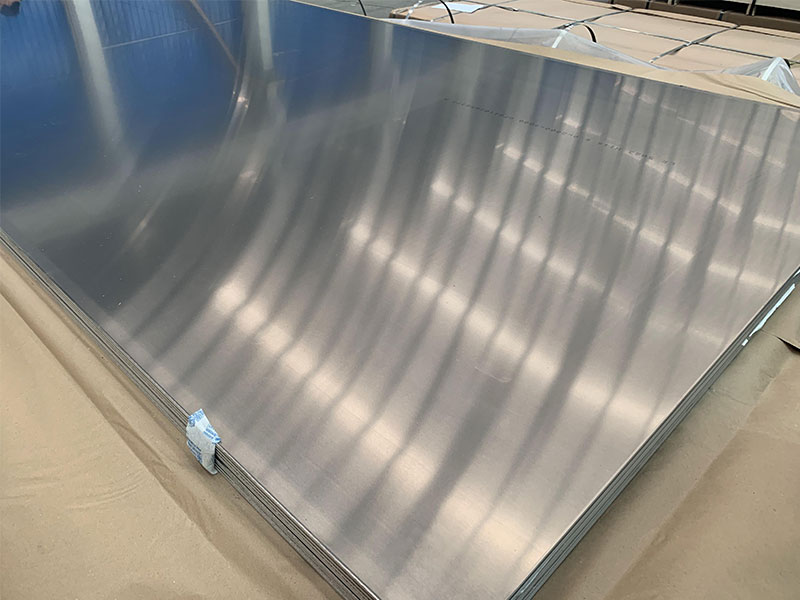
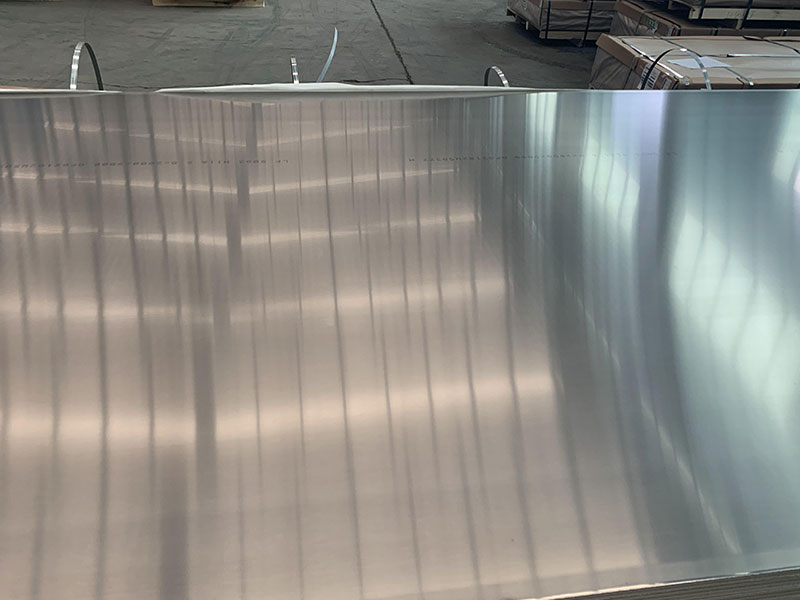
Marine Grade 5083 H112 H116 Aluminium is one of the most trusted aluminum alloys for shipbuilding, offshore structures, and corrosive marine environments. Known for its excellent resistance to seawater, high strength, and reliable weldability, 5083 aluminum is widely used where lightweight construction and long-term durability are essential. In the H112 and H116 tempers, this alloy offers an effective balance of formability, structural performance, and corrosion resistance, making it a preferred solution for hulls, decks, superstructures, storage tanks, and marine transportation equipment.
5083 is a non-heat-treatable aluminum-magnesium alloy with high magnesium content, giving it superior strength compared with many other marine aluminum grades. It performs especially well in environments exposed to saltwater, humidity, and industrial pollutants.
The H112 temper is commonly supplied for products that have undergone some processing but do not have a special strain-hardening control. It is often selected where moderate strength and good forming capability are needed.
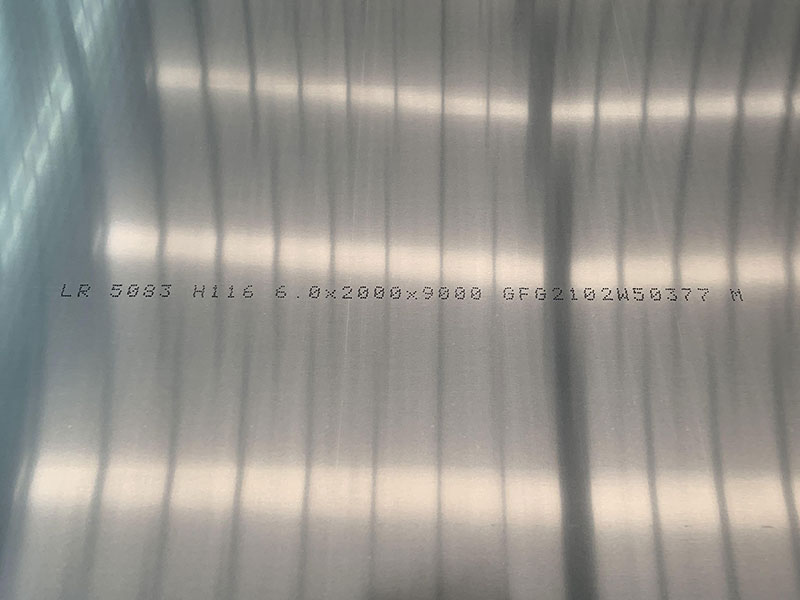
The H116 temper is specifically developed for marine service, particularly for rolled aluminum products exposed to seawater. It is designed to provide enhanced resistance to exfoliation corrosion and maintain dependable mechanical strength in demanding marine conditions.
Features
| Feature | Benefit to Customers |
|---|---|
| Excellent seawater corrosion resistance | Ideal for hulls, decks, offshore and coastal structures |
| High strength-to-weight ratio | Reduces vessel weight while maintaining structural integrity |
| Very good weldability | Suitable for large fabricated marine assemblies |
| Good toughness at low temperatures | Performs reliably in cold marine climates |
| Non-heat-treatable stability | Predictable performance after fabrication |
| Strong resistance to industrial and chemical exposure | Useful for tanks, pressure vessels, and transport equipment |
| H116 marine temper availability | Improved corrosion performance for seawater-exposed products |
| H112 temper flexibility | Good choice for formed or general structural applications |
Why 5083 Is a Marine-Preferred Alloy
Among aluminum alloys used in marine construction, 5083 stands out because it combines strength, corrosion resistance, and fabrication efficiency. Unlike some other materials that may require heavy coatings or involve higher structural weight, 5083 naturally supports lightweight design and lower maintenance needs.
For boat builders and marine engineers, this means longer service life, better fuel efficiency, and easier fabrication. For industrial buyers, it means dependable material performance in tanks, cryogenic systems, truck bodies, and pressure-related applications.
Alloy Temper Conditions
| Temper | Description | Typical Characteristics | Common Use |
|---|---|---|---|
| H112 | Strain-hardened from working processes, without precise temper control | Good general strength, good formability, suitable for fabricated parts | Structural sections, formed plates, transport and industrial parts |
| H116 | Specially strain-hardened and stabilized for marine exposure | Higher strength, improved resistance to exfoliation corrosion in seawater | Ship hull plating, decks, superstructures, offshore components |
Chemical Composition
The following table shows the typical chemical composition limits for AA 5083 aluminum alloy.
| Element | Composition (%) |
|---|---|
| Magnesium (Mg) | 4.0 – 4.9 |
| Manganese (Mn) | 0.40 – 1.0 |
| Chromium (Cr) | 0.05 – 0.25 |
| Silicon (Si) | 0.40 max |
| Iron (Fe) | 0.40 max |
| Copper (Cu) | 0.10 max |
| Zinc (Zn) | 0.25 max |
| Titanium (Ti) | 0.15 max |
| Aluminum (Al) | Remainder |
This chemistry gives 5083 its signature combination of high corrosion resistance and excellent mechanical performance, especially in chloride-rich environments.
Mechanical Properties
Mechanical values vary with thickness, product form, and applicable standard. The values below are typical reference ranges for plate products.
| Property | 5083 H112 | 5083 H116 |
|---|---|---|
| Tensile Strength | 270–350 MPa | 305–385 MPa |
| Yield Strength | 125–165 MPa | 215–305 MPa |
| Elongation | 12–20% | 10–16% |
| Brinell Hardness | ~75 HB | ~85 HB |
These values show why H116 is often selected for marine structural plating where higher strength is required, while H112 remains attractive for applications demanding more flexibility in forming and fabrication.
Physical Properties
| Property | Value |
|---|---|
| Density | 2.66 g/cm³ |
| Melting Range | 570–640°C |
| Modulus of Elasticity | 70 GPa |
| Electrical Conductivity | ~29% IACS |
| Thermal Conductivity | ~121 W/m·K |
| Coefficient of Thermal Expansion | 23.8 × 10⁻⁶ /K |
These physical properties help explain the alloy's popularity in lightweight transportation and marine engineering. Its relatively low density significantly reduces total structure weight compared with steel.
Corrosion Resistance
One of the biggest reasons buyers choose Marine Grade 5083 H112 H116 Aluminium is its outstanding corrosion resistance. The alloy performs very well in:
| Environment | Performance |
|---|---|
| Seawater immersion | Excellent |
| Salt-laden atmosphere | Excellent |
| Industrial atmosphere | Very good |
| Chemical transport service | Very good |
| Low-temperature service | Excellent |
The H116 temper is especially valuable in marine applications because it is designed to resist exfoliation corrosion, a critical concern for rolled plate exposed to seawater over long service periods.
Fabrication Performance
| Fabrication Characteristic | Performance |
|---|---|
| Welding | Excellent |
| Forming | Good |
| Machining | Fair |
| Anodizing | Good |
| Heat treatment strengthening | Not applicable |
5083 can be welded successfully using common arc welding methods, including MIG and TIG. Importantly, it retains good strength in the welded condition compared with many other aluminum alloys. This makes it highly practical for large marine assemblies and custom fabricated structures.
Typical Product Forms
| Product Form | Availability |
|---|---|
| Plate | Very common |
| Sheet | Common |
| Coil | Available |
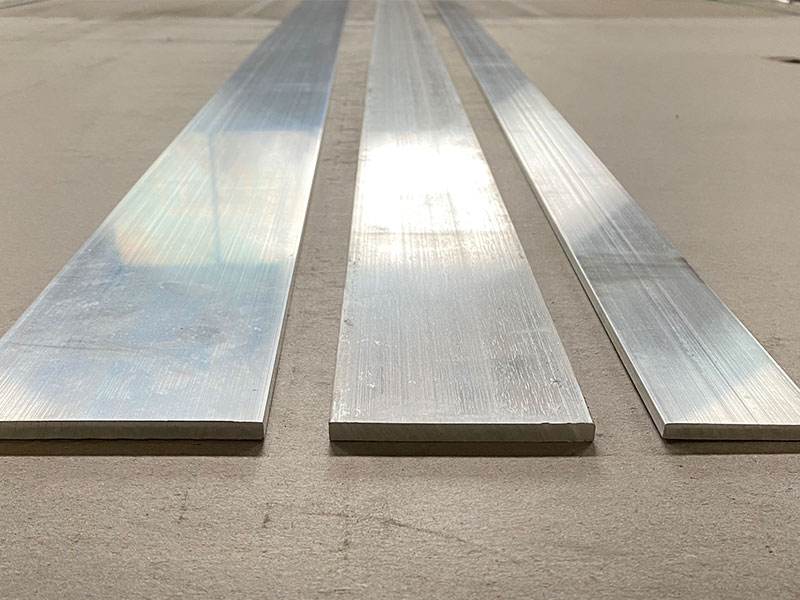
| Extrusions | Limited in 5083 compared with some other alloys |
| Marine structural panels | Common in shipbuilding supply chains |
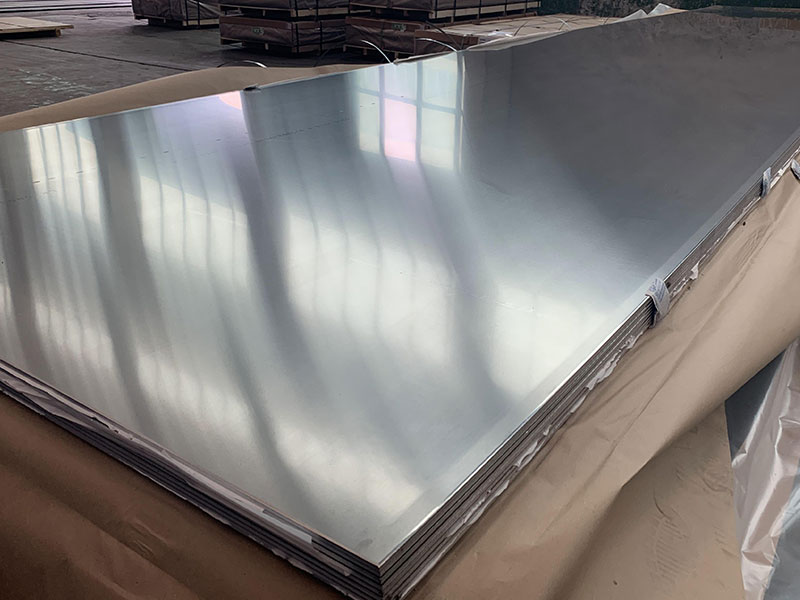
Plate is the most common form for marine applications, especially in H116 temper for hull and deck construction.
Main Applications
| Industry | Typical Uses |
|---|---|
| Shipbuilding | Hulls, decks, bulkheads, superstructures |
| Offshore engineering | Platforms, gangways, support structures |
| Transportation | Tanker bodies, truck panels, rail components |
| Storage systems | LNG tanks, cryogenic vessels, pressure containers |
| Defense and special vehicles | Armored and lightweight structural panels |
| Industrial fabrication | Chemical tanks, process equipment, walkways |
For marine customers, 5083 is often chosen for parts that must combine light weight, long life, and strong welded performance. In transport and tank applications, its corrosion resistance and low-temperature toughness are equally important.
Advantages Compared with Other Marine Alloys
| Alloy | Main Difference |
|---|---|
| 5052 | Lower strength than 5083, easier for some forming applications |
| 5086 | Similar marine use, but 5083 often preferred for higher strength plate |
| 6061 | Good structural alloy, but generally less suitable than 5083 for direct marine corrosion exposure |
| Steel | Much heavier and may require more corrosion protection |
5083 is frequently selected when customers need a stronger marine alloy than 5052 and a more seawater-optimized material than many general-purpose structural aluminum grades.
Buying Considerations
When specifying Marine Grade 5083 H112 H116 Aluminium, customers should review the following points:
| Consideration | Why It Matters |
|---|---|
| Temper selection | H112 for general fabrication, H116 for marine corrosion-critical structures |
| Plate thickness | Mechanical properties vary with thickness |
| Certification standard | Important for shipbuilding and offshore approval |
| Welded design requirements | Helps ensure final structural performance |
| Surface condition | Affects appearance and downstream processing |
For shipbuilding projects, buyers often request compliance with marine classification or recognized material standards to ensure suitability for long-term seawater service.
https://www.aluminumplate.net/a/marine-grade-5083-h112-h116-aluminium.html